





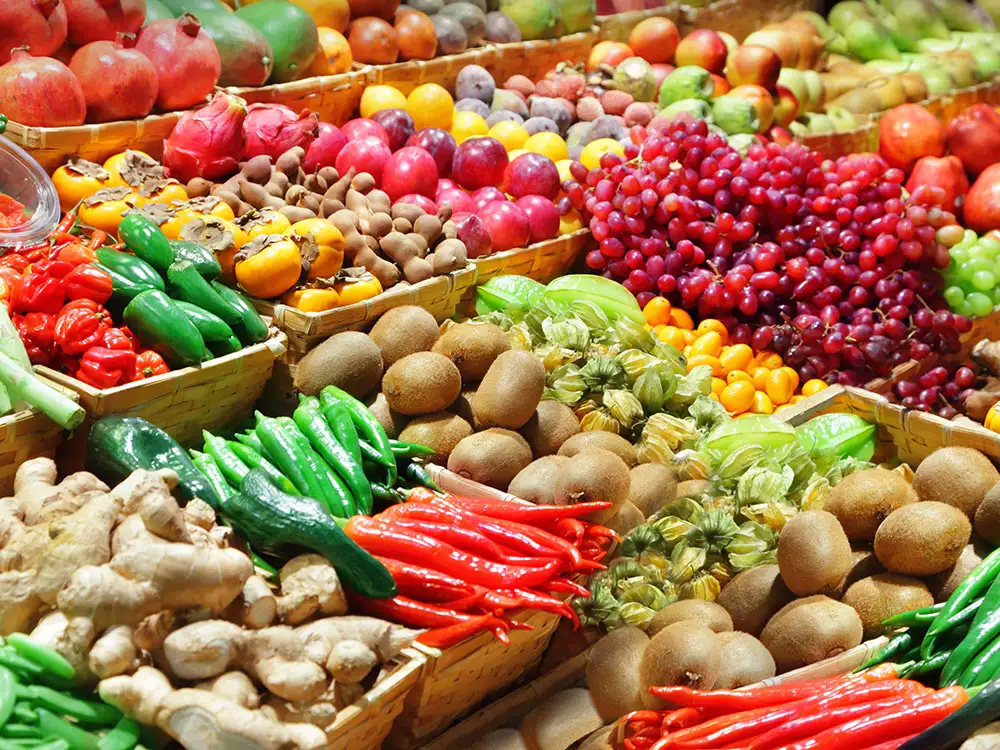

Climate change is going to hit food production. But there is a way York could plan to feed its residents, says climate activist Geoff Beacon
It is likely that climate change will cause a fall in food supply. Many people in the world will go hungry – or worse.
This must be taken into account in York’s Local Plan. But how?
To counteract world food shortages we should all move towards plant based diets. We should also boost local food production by planning measures.
A market garden economy
The French market gardens of the 1890s, the Marishes, produced much more food per hectare than growers do now, according to researchers.
These were gradually replaced by mechanised food growing which used more land and less labour.
In the modern day, the Singing Frogs Farm in California generates over £74,000 per acre in revenue from a three-acre no-till market garden.
The per-acre revenue numbers are what make Singing Frogs Farm a landmark: £74,000-plus per acre versus £2,200-£3,700 for conventional vegetable farms.
Even if the monetary difference is due to crop differences, the labour intensive nature of their method shows much greater yields per acre can be achieved when more labour is used.
The wages problem
UK wages have shifted from an era of steady growth to one of historic real-wage stagnation and rising inequality.
Since the 2008 financial crisis, inflation-adjusted wages have largely stagnated. An analysis by the Resolution Foundation shows that while UK real wages grew by an average of 33% per decade between 1970 and 2007, they flatlined entirely after the 2008 financial crisis, despite being supported for the low-paid by minimum wage legislation.
AI is likely to reduce the need for labour.
The need for boosting our home-grown food coupled with a jobs crisis leads to an obvious answer. Employ more people growing food.
That’s another reason for giving up some land currently used for traditional agriculture and converting it to high intensity market gardens.
As well as creating more jobs, such a change could bring in methods of food growing that will use much less chemical fertiliser – the production of which causes a substantial proportion of the world’s carbon emissions.
Local plans can do it
Local plans can designate specific areas for horticulture. Local planning authorities often allocate land for market gardens, community food growing spaces, allotments, and commercial horticultural development areas to support sustainable food networks and local economies.
The York Local Plan should do this.
In addition, the plan should aim that most new housing should have gardens. Most people want gardens, as surveys by Professor Carmona of UCL have shown.
Research by the Royal Horticultural Society and Horticultural Trades Association shows that more than 35% of UK adults actively grow their own fruit, vegetables, or herbs.
- Space Access: 78% of British adults have access to a private garden, and a third set aside dedicated patches for vegetables.
- Interest vs. Reality: Up to 60% of urban Brits would like to grow their own produce. However, allotment availability has declined by about 60% since the 1950s, creating barriers for those lacking garden space.