





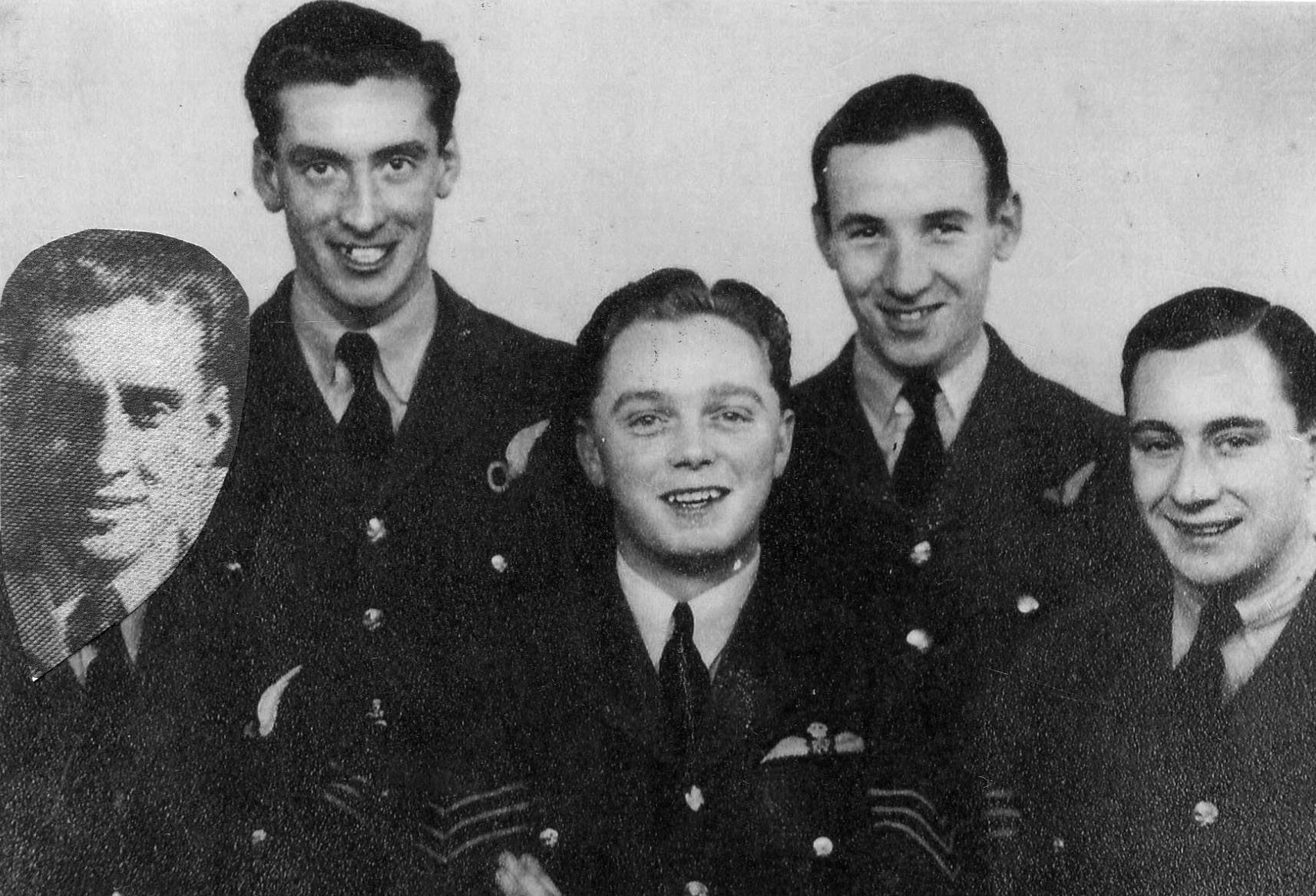

Burn resident and former York Press journalist Bill Hearld tells a remarkable story of war heroism and remembrance
When Wellington bomber HE 440 took off from Burn Airfield, near Selby, at the height of World War Two, the five-man crew, all in their 20s, could not know they had only hours to live.
The brand new aircraft, part of the 431 Squadron Canadian Royal Air Force based at Burn, took off with 12 other Wellingtons from the squadron at 11.40pm on May 12, 1943, to bomb the German city of Duisburg.
However, on its flight home it was attacked by a German fighter aircraft over Holland and shot down, killing all five RAF crewmen a few kilometres from the Dutch town of Winterswijk in eastern Holland.
The crewmen were buried in the town’s main cemetery.

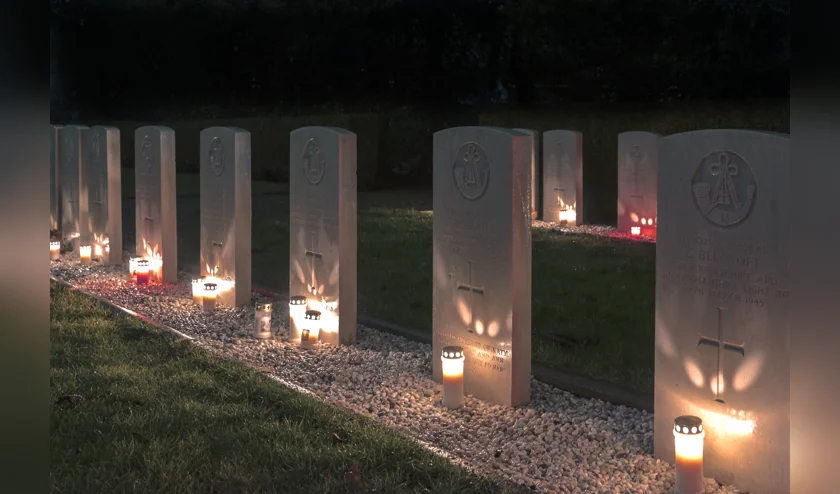
It has just emerged that the people of that town still carefully maintain the five graves along with those of 41 other British airmen and turn out in large numbers twice a year to commemorate the deaths, even after more than 80 years.
And much of it is due to Peter Rhebergen, aged 77, who was a town hall official for more than 40 years and has made the crash and other wartime aircraft, his “life’s work”.

Now Burn Parish Council has written to the Burgomeester (Mayor) of Winterswijk officially thanking the townspeople for their “utter respect” in keeping alive the memory of the fallen heroes.
In her letter, Alice Houlden said: “I am chairman of the parish council in Burn, a small village near Selby in North Yorkshire, England.
“I was recently very moved to learn that the crew of a Wellington bomber which flew from Burn Airfield in 1943 and was shot down over Holland, are buried in your lovely town of Winterswijk.
“I also learned through Peter Rhebergen, of Winterswijk, that the graves are beautifully maintained and the English airmen are commemorated twice a year by you and your townspeople.
“On behalf of the people of Burn, I would like to officially thank you all for your kindness and respect for honouring these fallen heroes, even after so many years since the end of World War Two.
“Burn’s old wartime airfield, once the base of RAF and Royal Canadian Air Force bomber squadrons, is now home to Burn Gliding Club. Our one village pub, The Wheatsheaf, displays old photographs of the wartime airfield and other memorabilia.”
The raid on Duisburg consisted of over 500 British bombers. It was a disastrous night for the RAF with 34 aircraft lost. Wellington bomber HE440 was on only its second mission.
One of the crew, Innis Mobley, apparently managed to leave the fiercely burning aircraft at the very last moment but his body was found approximately 100 metres from the crash site. His parachute failed to open in time.
The people of Winterswijk keep the graves in pristine condition and twice a year since the war ended have commemorated the lost crew members on May 4 (their Commemoration Day) with flowers and on Christmas Eve, when they light candles at each grave. The ceremonies are also attended by the burgomeester and other town hall officials.
The all-British crew members were: George Robert Yorston Wood, aged 23 (pilot); Andrew Cresswell, 23 (wireless operator and gunner); Thomas Haig Smith, 23 (gunner); Edward Leo Gummer, 20 (navigator); Innis Edward Mobley, 21 (bomb aimer).
Their story came to light after Peter Rhebergen contacted a member of Burn Gliding Club which operates out of the airfield near Selby. Peter and his brother Wim visited Burn a few years ago and his camera was taken up in a glider to photograph the airfield layout.
“My father himself did not see the crash as he was living in another village ( Aalten) but he often told me about the air battles which also took place.” said Peter.
“I began researching some crashes around Winterswijk. I also made a painstaking study of the crash of Wellington HE440.
“It became a passion for me and I developed an interest in aviation, fuelled by my father’s stories about the bombers which came over our area on the missions to Germany but were shot down and crashed near here, killing so many young airmen. I cannot forget their sacrifices and it became my life’s work.
“The reason we in Winterswijk still commemorate this crew is that after so many years have passed since the war, we still have much respect for all those young airmen who lost their lives during the conflict.”
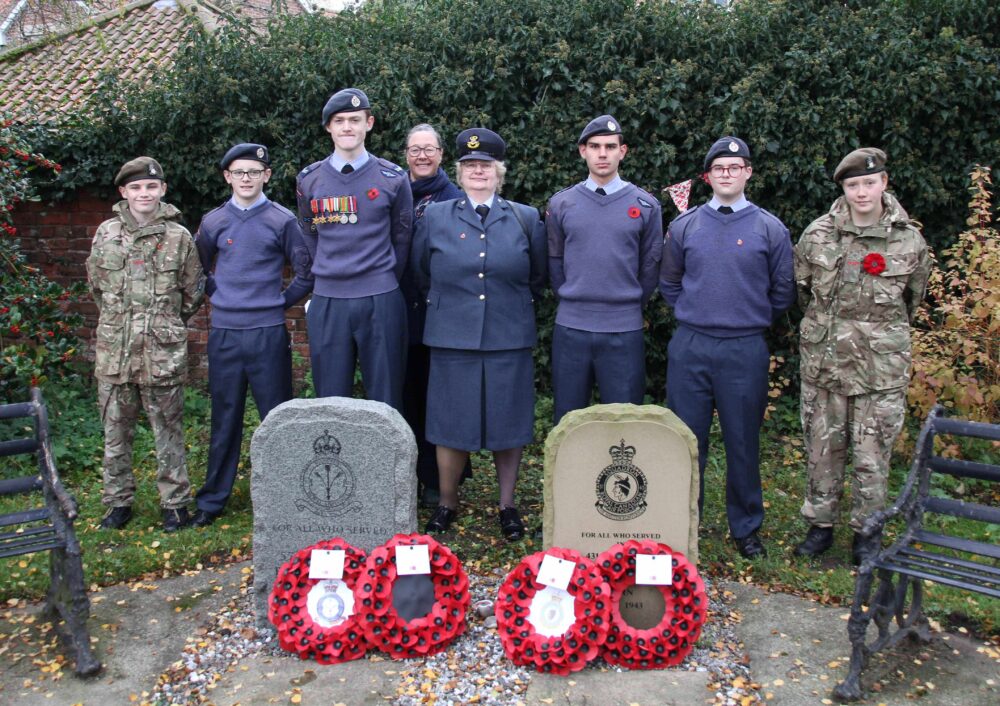
Memorial stones marking the two squadrons which flew out of Burn, 431 “Iroquois” Squadron Royal Canadian Air Force and RAF 578 Squadron, form the centrepiece of Burn Village Green.