





York has never really stopped being a city that argues about probability.
Long before it had a university, it had a racecourse, a chess club older than most pubs, and a reputation for producing people who ask “yes, but what are the actual odds” before they ask anything else.
That habit got formalised in 1963, when the University of York opened its doors as a research university built on the same instinct — a member of the Russell Group, its rankings page still leans hard on that research pedigree rather than campus gimmicks. Walk through the city on a Friday night and you’ll find postgrads from the Maths and Computer Science departments arguing about card counting the way other cities argue about football formations.
That’s the audience this is for: people who already understand that “the odds” aren’t a vibe, they’re a number, and the number changes depending on what you’re playing.
What House Edge Actually Means
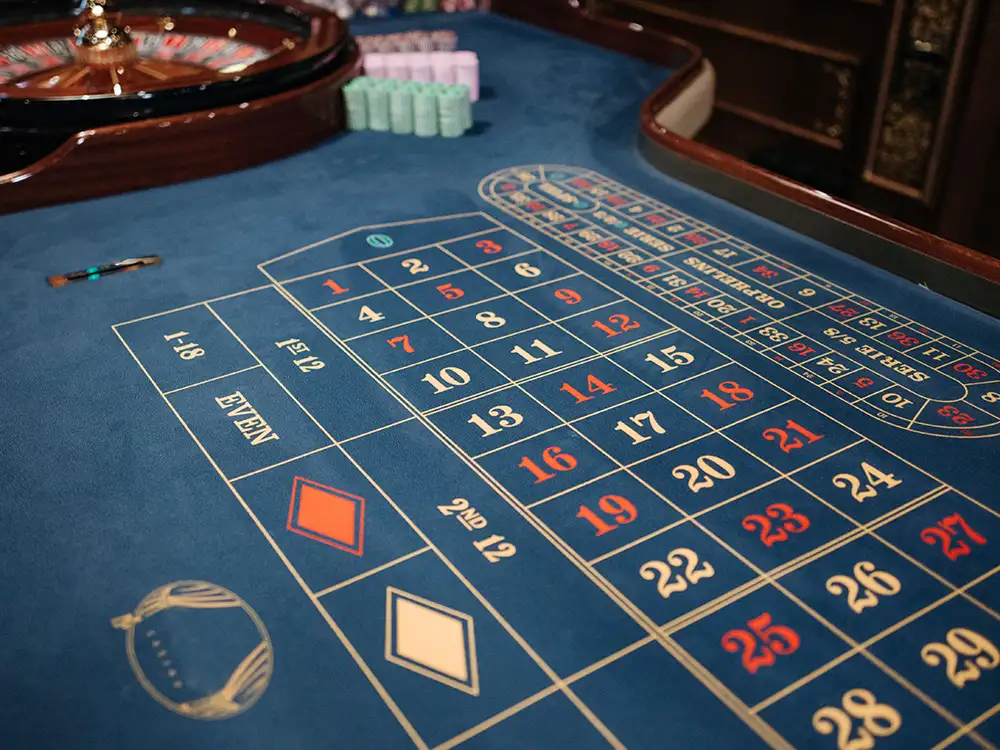
Every casino game, physical or online, has a built-in mathematical advantage for the house. It’s not a conspiracy, it’s arithmetic — a percentage of every pound wagered that the game is designed to keep over the long run. Blackjack played with decent strategy sits at roughly 0.5%. European roulette runs closer to 2.7%, because a single zero pocket tilts things slightly more than most players clock. American roulette, with its extra double-zero, pushes past 5%. Slots vary enormously — some sit under 3%, others considerably higher, and unlike table games the number usually isn’t printed anywhere obvious on the screen.
None of this means slots are a trap or blackjack is a guaranteed path to profit. House edge describes what happens over thousands of spins or hands, not what happens on a Tuesday night with £20 and a glass of wine. For a full game-by-game breakdown rather than percentages recited from memory, gambling.com has a list of the casino games with the lowest house edge that sets it out properly — useful to check before deciding where an evening’s stake goes, rather than after.
It’s the kind of resource that rewards the same instinct a Maths postgrad brings to a lecture theatre: don’t take a number on faith, go and check it.
Where the Numbers Actually Diverge
Baccarat is the one that surprises people who assume simpler games mean worse odds — betting on the banker hand carries a house edge around 1.06%, better than most roulette variants despite baccarat’s reputation as a “high roller” game. Video poker, played with correct strategy on the right pay tables, can dip below 0.5% too. None of that is obvious just from looking at a game’s felt or its graphics; it only shows up once someone bothers to run the numbers, which is precisely the kind of task York’s academic population treats as a Tuesday afternoon rather than a chore.
The Community Angle
York’s charity scene has leaned into this territory too — a North Yorkshire charity recently ran a casino night as a fundraiser, a reminder that low house edge casino games aren’t strictly an online-only conversation. The format works because the games are genuinely playable by people who’ve never sat at a table before, without the house taking an unreasonable cut. Online, the same principle holds: a new player who understands which games carry a lower mathematical disadvantage — blackjack and baccarat over the double-zero wheel — starts from a stronger position than one who picks whatever has the flashiest graphics.
What This Actually Comes Down To
Nobody’s claiming a university town has some special access to better luck. What York has is a population that’s comfortable treating a night of low-stakes entertainment the way it treats a pub quiz: something to be slightly competitive about, and something worth understanding the mechanics of before playing. The house edge isn’t hidden information. It’s published, it’s consistent, and it rewards the players who bother to look it up — which, if this city’s reputation means anything at all, should be most of them.